How to Steep a Delicious Cup of Tea
A good cup starts with a few small choices: how much tea, how hot the water and how long you let it steep. Get those right for your blend, then enjoy the fun part—finding how you like it served.
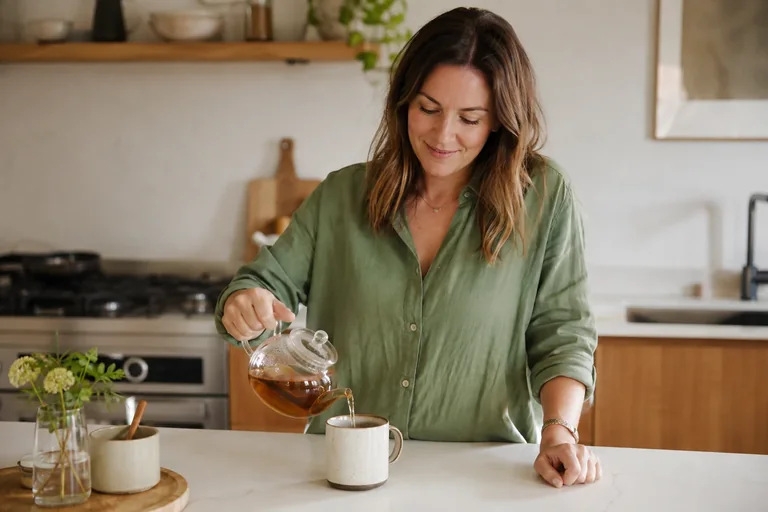
Set out a simple brewing kit
You need a clean cup or pot, drinking water, a kettle and a timer. For loose tea, add an infuser or strainer with room for the leaves to open. A measuring spoon and a marked jug help make the next cup as good as the first.
- Green tea
- About 80°C / 175°F · 1–3 minutes.
- Black tea
- Near boiling · about 5 minutes.
- Herbal drinks
- Follow the ingredient or product recipe; roots may need simmering.
- Portion example
- About 2–3 g loose leaf per 240 ml; adjust for the specific tea.
Give different teas different treatment
Black tea and green tea usually need different brewing times. As a useful example, Twinings recommends 3–5 minutes for its black teas and about 2 minutes for green tea. Your own blend’s directions are the starting point, especially for mixed herbal drinks.
Measure the water as well as the tea. A generous mug can hold considerably more than a small teacup, so the same bag may taste lighter in one than the other. Once you know your favourite cup’s capacity, repeating a brew becomes easy.
Tweak the next cup
If ordinary black or green tea tastes bitter, try a shorter steep within the maker’s guidance. If it tastes weak, check your tea-to-water ratio. Change one thing at a time so you can tell what made the difference.
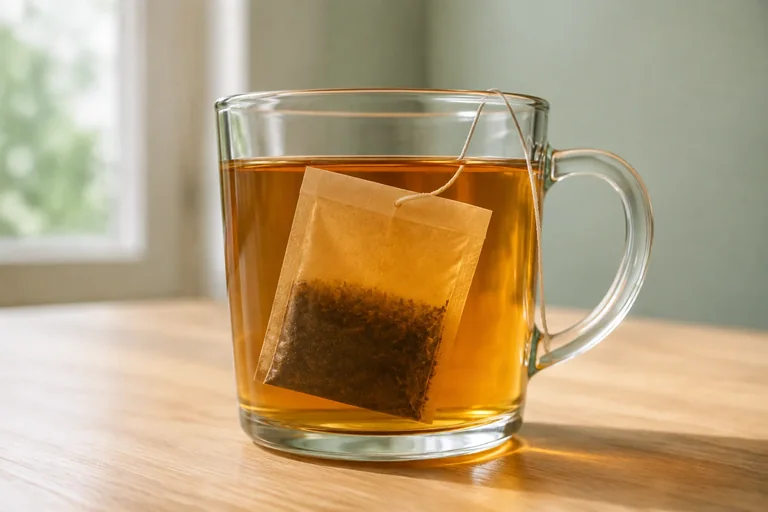
Plain, bright or creamy?
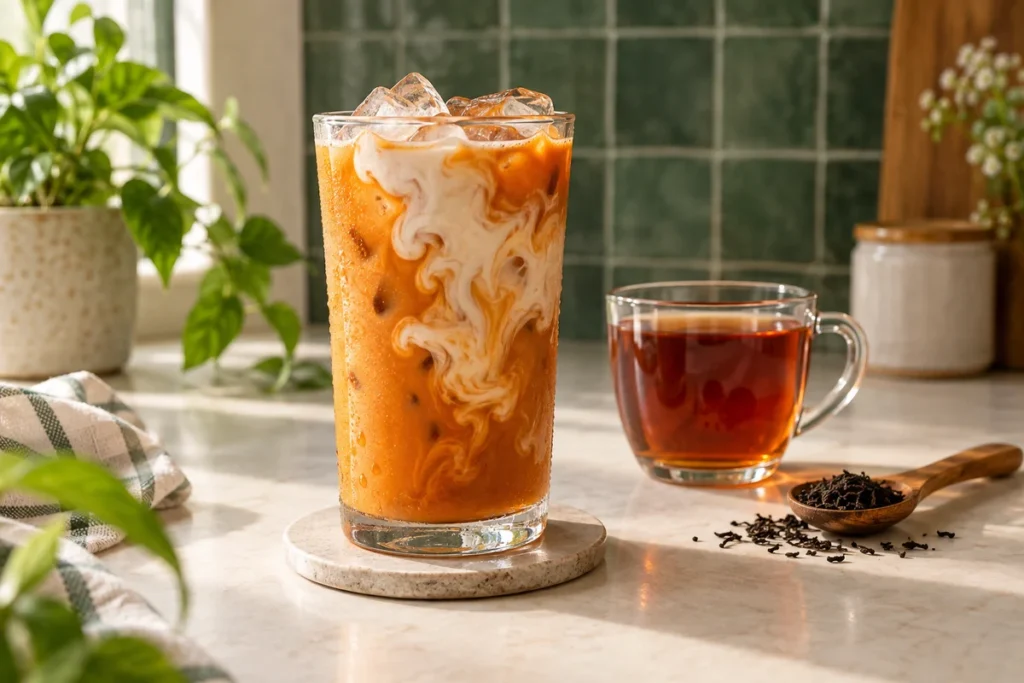
Taste your first sip before adding anything. A little milk can suit a robust black tea; lemon gives a brighter finish. For an iced serving, prepare the tea first and let it cool before pouring over ice. Start with a small amount of sweetener and stir well.
- Weak
- Check water volume and leaf quantity first.
- Bitter
- Shorten the steep; cool the water for green tea.
- Gritty
- Use a finer strainer for loose material.
- Flat
- Check freshness and dry, closed storage.
Measure your mug before changing the tea
If the instructions describe one cup, check whether they also give a water volume. Fill your usual mug with water and pour it into a measuring jug. A mug holding twice the stated volume will dilute the same portion of tea. Marking the right level in your mind is often enough to solve a weak brew without changing brands or buying equipment.
For loose leaves, use the stated weight when one is supplied; a heaped spoon and a level spoon can hold quite different amounts.
When making a pot for two, scale the tea and water together according to the directions. Simply leaving a single portion in twice as much water for longer may change bitterness without delivering the flavour you wanted. A kitchen timer helps you separate the amount of tea from the time it spends in the water.
Give loose leaves space to open
A tightly packed infuser leaves little room for water to circulate around the tea. Choose a basket that fits comfortably in your cup and leaves room around the measured portion. Set the strainer over the receiving cup before pouring from a pot, so you are not looking for it while holding hot tea. With a tea bag, remove any outer protective envelope first; the brewing bag itself stays intact.
Keep the flavour of earlier drinks out of the cup. Wash away milk residue and strong washing-up scents, and rinse the infuser after use. If you use the same travel mug for coffee and tea, check the lid and seal as well as the main cup. Those little places can retain aromas that make a delicate brew seem odd.
Diagnose the cup you actually made
A watery cup suggests checking the water volume and tea portion first. A bitter cup suggests checking temperature and steeping time against the maker’s recommendation. A gritty cup suggests a strainer that is too coarse or loose material escaping from the bag. If an instant drink has dry lumps, check that you have followed its mixing sequence and stirred the bottom of the cup thoroughly. These are different problems, so they need different adjustments.
Keep one variable steady while changing another. Use the same mug and amount of tea for a timing comparison. Use the same timing when comparing two water amounts allowed by the instructions. Once a cup tastes right, note the method. That turns a lucky result into a repeatable everyday drink.
Finish the drink to suit the tea
Milk can soften the taste of a robust black tea, while citrus gives a different finish. Try these separately: adding lemon to a milky drink can make it curdle. Dissolve a little sugar or honey while the tea is warm, then taste before adding more. If the product is a sweetened mix, make the first serving without extra sweetener so you know its starting point.
For your first iced version, brew the tea as directed and cool it before adding ice. Taste again as the ice melts. If you prefer the flavour of the warm cup, use less ice next time rather than changing several parts of the recipe together. The aim is a cup that suits your taste and is simple enough to make again tomorrow.
Choose a format that fits your day
Bags make measuring easy, while loose leaves give you more flexibility with the amount you use. Soluble drinks are stirred into water rather than strained. Our tea collection includes different formats, so you can choose the preparation you enjoy.
Find your next cup
Explore Thai teas by blend, flavour and format.