Tea for Pain Relief: Ginger, Turmeric and What the Research Shows
Can a herbal tea help with pain? Ginger has encouraging research for period cramps, while turmeric preparations have been studied for aching knees. The results depend on the type of pain and the product tested. Here is what the research found, followed by two warming drinks to make at home.
Which ingredients are worth considering?
For period cramps, ginger is worth a closer look. For knee osteoarthritis, a joint condition that can cause pain and stiffness, turmeric preparations have promising findings. Peppermint oil has a different use: research has focused on abdominal symptoms of irritable bowel syndrome, often shortened to IBS.
Most of the research used capsules or concentrated extracts rather than tea. Those preparations can deliver very different amounts from a brewed drink, so the evidence applies most directly to the products named in each study.
The comparison below gives you a quick way to find the research relevant to your concern. You can then explore the results in more detail, or jump to the recipes if you want a ginger infusion or golden turmeric drink for its flavour.
- Period cramps
- Ginger capsules have encouraging results; the benefit from tea is uncertain.
- Knee osteoarthritis
- Turmeric research products show promise for pain and everyday movement.
- IBS discomfort
- Peppermint-oil capsules have been studied for IBS symptoms; mint tea is different.
- Exercise soreness
- Ginger: small trials of daily supplementation, rather than one post-workout cup.
Ginger and menstrual cramps
A 2024 review of ginger research found that menstrual pain was less intense and lasted less time than with a placebo. The researchers examined 24 studies and combined results from 12 in their numerical analysis.
These studies looked at common period cramps, not pain caused by a diagnosed condition such as endometriosis. Some studies were stronger than others, so the results are encouraging but cannot promise relief for everyone.
One trial involving 122 students compared ginger capsules with the painkiller mefenamic acid over two menstrual cycles. Pain improved in both groups, with no clear difference between them. The trial was encouraging, although it was not designed to establish that the treatments work equally well.
The ginger group used 250 mg capsules every six hours from the start of menstruation during the treatment period. This tells us what the researchers tested, although it does not translate into a strength for homemade tea.
Ginger after exercise and for headaches
A 2010 exercise study investigated daily raw or heat-treated ginger supplementation. After an exercise designed to cause soreness, pain at 24 hours was about 23–25% lower than with placebo. Ginger was taken over an 11-day period, rather than as a one-off cup after exercise.
The study concerned normal post-exercise soreness rather than an injury, and participants took ginger regularly before their pain was measured. Ginger tea was not part of the trial.
Migraine research is more mixed. Some small studies have reported positive acute-pain results, while a recent systematic review found substantial uncertainty around several comparisons. Ginger tea is not an established replacement for a migraine treatment plan.
Turmeric and aching knees
A 2025 review of 17 studies found lower knee-pain scores with turmeric preparations than with placebo. Some measures of everyday physical function also improved. Stiffness did not improve clearly compared with placebo, so the results were more encouraging for pain than for every symptom.
Many research products contain concentrated curcumin, one of turmeric’s main studied compounds, and some are formulated to improve absorption. A kitchen turmeric drink offers the spice’s earthy flavour and golden colour, but it is a different preparation from those trial products.
The studies used different turmeric products, and some results were uncertain. The review does not identify one product as clearly best. It found possible relief from pain, but it did not show that turmeric repairs damaged cartilage.
For a drink, turmeric brings an earthy flavour and a vivid golden colour. A small amount works well in warm milk or a milk alternative, especially with a little cinnamon. Start lightly: too much powder can taste bitter and leave a gritty texture.

Peppermint and digestive discomfort
Peppermint oil has been studied for IBS, which can cause abdominal pain, bloating and changes in bowel habits. The products are usually capsules designed to release oil in the intestine. A 2022 review found symptom benefits, but low confidence in the evidence and more side effects.
Peppermint tea is very different from the oil capsules used in those studies. It makes a fresh, minty drink, but the capsule results do not prove that the tea relieves stomach pain. If you have diagnosed IBS, a pharmacist can explain which peppermint products have been designed for it.
Peppermint can also worsen reflux for some people. If the discomfort is burning after meals rather than the symptoms of diagnosed IBS, a peppermint recommendation may be poorly matched to the problem.
What about chamomile and other herbal drinks?
Chamomile has also been studied for period symptoms. A trial involving 200 students compared chamomile sachets with mefenamic acid and reported improvements in pain and related symptoms. The finding is promising, although it needs confirmation in broader groups and with clearly defined preparations.
Chamomile is softer and more floral than ginger and works well as a plain infusion. At home, prepare food-grade chamomile tea according to the packet and enjoy it for that gentler flavour.
For flavour, ginger suits someone who enjoys a peppery finish, peppermint gives a fresher cup and chamomile offers a softer floral alternative. Try a small serving plain before adding honey or citrus. That makes it easier to notice what you like and adjust the next cup.
- Ingredient trials
- Studies test a particular product for a particular type of pain.
- The recipes below
- Make a drink for its flavour; these are not treatment doses.
Two drinks to make at home
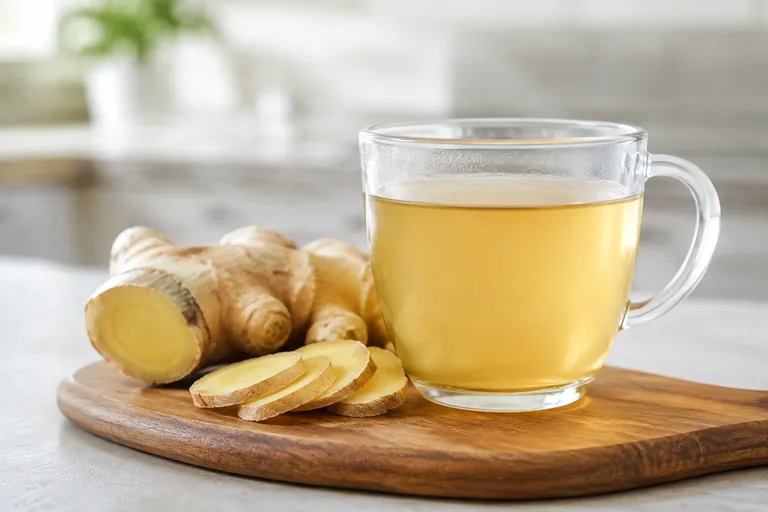
For one ginger infusion, try five thin slices of washed fresh ginger in 250 ml water. Bring to a gentle simmer for five minutes, then strain. Add a teaspoon of honey if you like sweetness, or a small squeeze of lemon or lime for brightness.
For one turmeric drink, whisk a quarter teaspoon of ground turmeric into 200 ml milk or an unsweetened milk alternative. Warm gently in a saucepan, stirring until evenly mixed. Add a small pinch of cinnamon and sweeten to taste. Stir again before serving because the powder can settle.
These are flavour-led drinks, not copies of the doses used in clinical studies. Adjust the honey, citrus and spice to suit your taste. Add a splash of water or milk if the result is too strong, or choose a prepared blend when you want one simple set of brewing directions.
- Ginger infusion
- 5 thin slices · 250 ml water · simmer 5 minutes.
- Turmeric drink
- ¼ tsp turmeric · 200 ml milk or alternative · warm and stir.
A few relevant cautions
Concentrated supplements can have different risks from food quantities. Discuss them with a pharmacist if you use regular medicines, particularly before combining several products marketed for pain. Persistent, severe or unexplained pain deserves an assessment rather than repeated experiments with stronger brews.
Ginger can cause heartburn or stomach upset, while peppermint can aggravate reflux. Choose a drink that agrees with you as well as tasting good. Browse our Thai tea collection for everyday drinking, and check the complete ingredients when choosing a blend containing several herbs.
Find your next cup
Explore Thai teas by blend, flavour and format.