Anti-Inflammatory Teas: Seven Ingredients and What the Research Shows
Ginger and turmeric have promising research for particular types of pain. Green and black tea offer different plant compounds, while chamomile, peppermint and clove bring other flavours and uses. Here is what we know about these seven ingredients and how they fit into a cup you would enjoy.
What does anti-inflammatory mean here?
“Anti-inflammatory” can describe several very different findings. The most useful research shows whether people felt less pain or moved more comfortably, while laboratory studies may only record a change in cells or blood markers.
Ginger and turmeric researchers have measured symptoms people can notice, including period pain and aching knees. Green-tea studies often measure signs of inflammation in the blood. A better blood result may be encouraging, but it does not automatically mean less pain or easier movement.
Antioxidant and anti-inflammatory results are also measured separately. A study can report stronger antioxidant activity without finding the same improvement in inflammation markers or symptoms.
Green tea: an interesting but mixed picture
A 2025 review of 38 trials found that green tea improved several measures of antioxidant activity. The inflammation results were less clear. Three common blood markers showed no overall improvement, while a fourth did.
The review therefore supports green tea as a source of antioxidant compounds, while leaving its effect on inflammatory conditions uncertain.
Green tea remains a rewarding everyday choice for its flavour. Brew it with cooler water than black tea and avoid a long steep if bitterness bothers you. A pleasant cup is easier to enjoy regularly than an over-brewed one made in pursuit of maximum strength.
- Several measures of antioxidant activity
- Improvement reported.
- Three common blood signs of inflammation
- No overall improvement.
- Another blood sign of inflammation
- Improvement reported.
Black tea: a different set of polyphenols
Black tea’s processing changes its polyphenol profile and flavour. It tends to provide more body for milk or a slice of citrus. It also contains caffeine, so it belongs in a different evening category from a pure flower or spice infusion.
Black tea contains natural plant compounds called polyphenols. A review of short-term tea studies found no overall improvement in blood pressure or blood fats. That review did not test pain relief, and it gives us no basis for calling black tea an inflammation treatment.
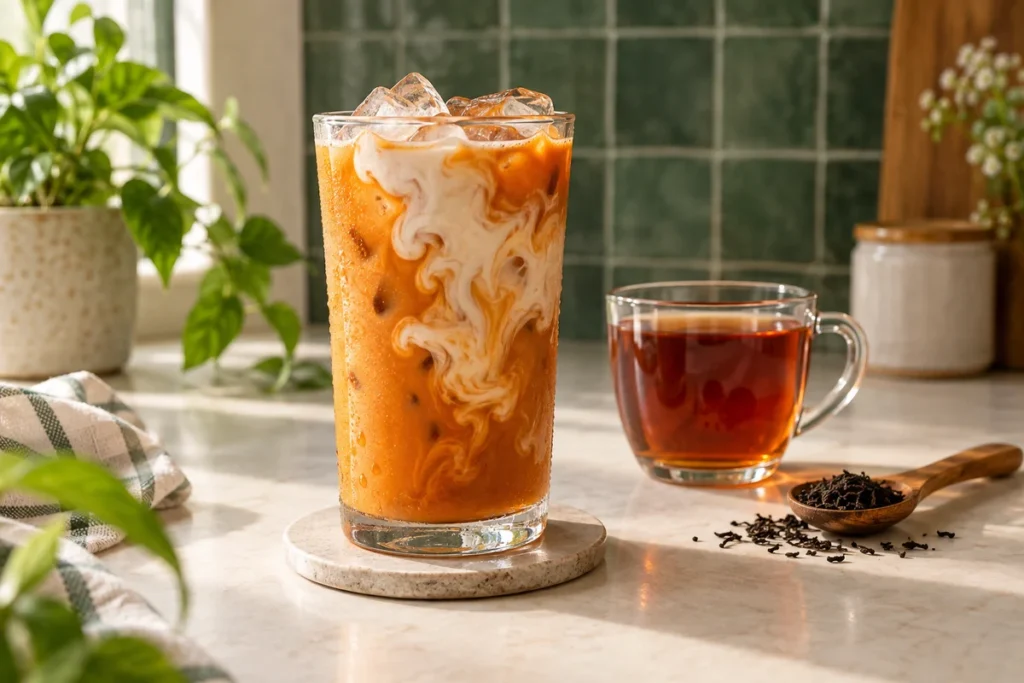
Choose black tea when you want a brisk, fuller cup that can hold its own with milk or ice. Brew it before adding either so you can judge its strength. For a clear drink, a small squeeze of lime gives a different finish from creamy milk tea.
Ginger: useful symptom research
Ginger has some of the clearest symptom research in this list. A 2024 review found that period pain was less intense and did not last as long as it did with a placebo. The studies were not all equally strong, but the overall finding is encouraging.
Most studies used measured ginger capsules or powders rather than tea. Our tea for pain guide explains the period-pain findings and other ginger research in more detail, alongside a flavour-led ginger infusion.
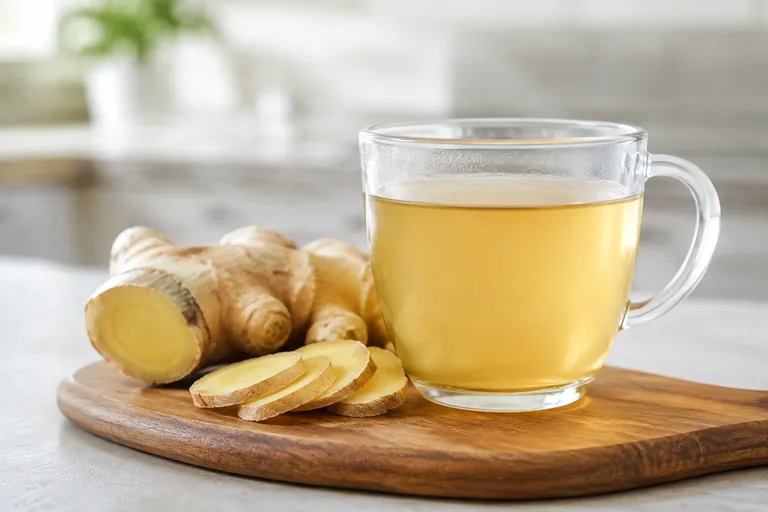
As a drink, ginger brings a peppery warmth that works well with citrus. Thinly slice fresh culinary ginger, simmer in water and strain. Begin with a mild cup if strong ginger tends to give you heartburn.
Turmeric: the joint-pain evidence
Turmeric products have been studied for knee osteoarthritis, a joint condition that can cause pain and stiffness. A 2025 review of 17 studies found promising pain results with different preparations. Some everyday movement measures also improved, although the reviewers had limited confidence in several comparisons.
Curcumin is one of the best-known compounds in turmeric. Research products often concentrate it or combine it with ingredients that improve absorption. A homemade drink uses ordinary kitchen turmeric, so the study results cannot tell us exactly what to expect from one cup.
For flavour, turmeric is earthy and can become bitter when used heavily. A small amount in warm milk or a milk alternative, with ginger or cinnamon if you like, is a more inviting starting point than a very concentrated powder-and-water mixture.

Chamomile, peppermint and clove
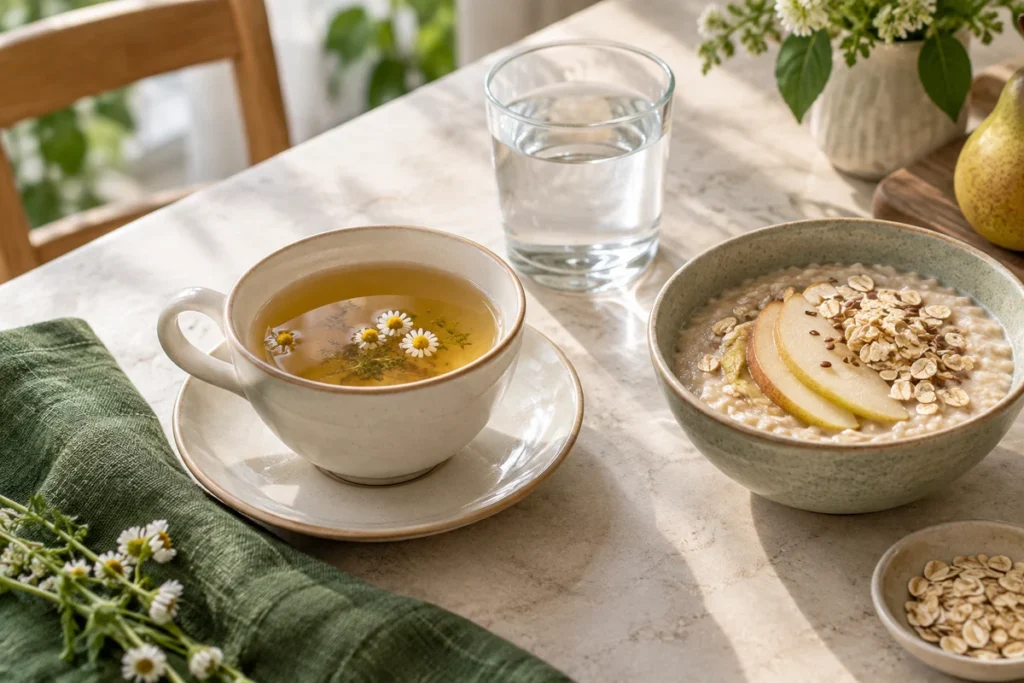
Chamomile makes a mellow, floral drink without the caffeine found in black or green tea. It is a lovely choice when you want a softer cup, although its research base is less directly relevant to inflammatory conditions than the ginger and turmeric studies above.
Peppermint oil has been studied for irritable bowel syndrome (IBS), a condition that can cause abdominal pain and changes in bowel habits. A 2022 review found symptom benefits but considerable uncertainty and more side effects. Those studies used oil capsules, rather than peppermint-leaf tea.
Clove brings a strong, warm aroma to a drink. One of its compounds, eugenol, has attracted laboratory research, but that does not yet establish a treatment benefit from clove tea. Use it as a spice: a little in a blend can complement ginger or cinnamon without overwhelming them.
- Brisk or vegetal
- Black or green tea — contains caffeine.
- Warm and spicy
- Ginger or a culinary turmeric drink.
- Floral or minty
- Pure chamomile or peppermint infusion — distinct from extracts and oil capsules.
Choose by flavour and by the actual question
For a daily leaf tea, explore green or black tea. For a spicy infusion, ginger is an accessible starting point. For a softer caffeine-free cup, consider a pure chamomile infusion. Turmeric is particularly suited to a warm milk-based drink rather than a clear tea.
Concentrated supplements are a different choice from the drinks described here. They can contain much larger amounts and bring different side effects or medicine interactions. Our herbal tea side-effects guide explains what to check for each ingredient.
Browse the tea collection for blends you would enjoy drinking. For questions about pain, use the condition-specific guide linked above; for brewing, follow the preparation suited to the actual leaf, flower or spice.
Find your next cup
Explore Thai teas by blend, flavour and format.