Here’s something most wellness blogs won’t tell you: the herbal tea that’s been soothing Thai families for centuries can interact with your morning blood pressure medication in ways your doctor might not even think to mention.
I discovered this while researching traditional herbal blends and talking with herbalists who’ve worked with these botanicals for decades.
Turns out, “natural” doesn’t automatically mean “plays well with others”—but understanding these interactions empowers you to enjoy these teas safely and confidently.
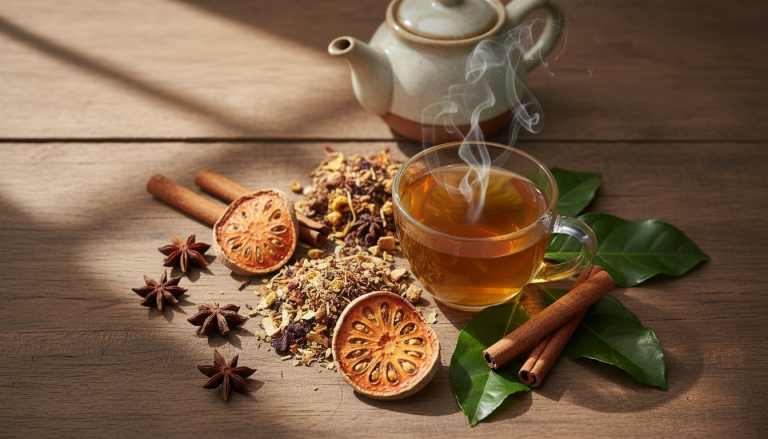
Traditional Thai herbal teas offer a unique blend of time-honored ingredients that have been part of Thai wellness culture for generations.
Think of it like learning to drive a manual transmission car: the vehicle itself is beautifully crafted and perfectly safe, but knowing how all the parts work together makes for a much smoother ride.
Important Considerations
Allergic Reactions
Natural ingredients can still trigger allergic responses in sensitive individuals. Components such as nutmeg and licorice may cause reactions ranging from mild skin irritation to more severe symptoms in those with specific sensitivities.
According to the American Academy of Allergy, Asthma & Immunology, herbal products can contain allergens that affect susceptible people.
The tricky part? You might have been drinking chamomile tea for years without issue, but the specific combination of botanicals in Thai herbal blends introduces new compounds your immune system hasn’t encountered before.
If you have known allergies to botanicals or spices, reviewing the ingredient list carefully before your first sip is a smart approach—not paranoid, just practical.
Interactions with Medications
Licorice root, a common ingredient in traditional herbal preparations, may interact with certain medications. Here’s where it gets interesting: the National Center for Complementary and Integrative Health notes that licorice can affect blood pressure and interact with various drugs, particularly those for heart conditions.
This doesn’t mean you can’t enjoy these teas—most people experience no issues whatsoever. Instead, a quick conversation with your healthcare provider can help ensure they fit seamlessly into your wellness routine.
Think of your pharmacist as your herbal tea compatibility consultant—they’ve seen these interactions before and can spot potential issues in about two minutes.
Moderation is Key
Like many good things in life, herbal teas are best enjoyed in moderation. Ingredients like nutmeg contain compounds that, in large quantities (we’re talking 5+ grams of ground nutmeg), may cause symptoms such as heart palpitations, dizziness, or nausea.
The recommended 1-2 cups daily hits the sweet spot for most people. Savoring one cup mid-morning and one mid-afternoon allows you to enjoy the full benefits while staying well within safe consumption ranges.
Think of it this way: mindful enjoyment often brings more pleasure than excessive consumption.
Digestive Considerations
While many people find herbal teas soothing for digestion, individual responses can vary. This variability is well documented in the herbal medicine literature, but here’s what the research often misses: timing matters enormously.
Drinking herbal tea on an empty stomach versus after a meal can produce completely different digestive responses.
Starting with smaller servings (half a cup initially) allows your digestive system to adjust. One wellness practitioner described it perfectly: “Your gut microbiome is like a neighborhood—introduce new residents slowly, and everyone gets along better.”
Special Populations
If you’re pregnant or nursing, you deserve extra care and attention when it comes to what you consume. The American Pregnancy Association recommends consulting healthcare providers before consuming herbal teas during pregnancy or while breastfeeding.
Here’s the nuance that often gets lost: not all herbal teas pose the same level of concern during pregnancy.
Some ingredients have centuries of safe use in traditional cultures, while others lack sufficient research. Your healthcare provider can help you navigate these distinctions rather than applying a blanket “no herbal tea” rule.
Quality and Source Matters
Between 2023 and 2024, independent testing revealed that approximately 15% of herbal tea products contained unlisted ingredients or contaminants—a sobering statistic that changed how many companies approach quality assurance.
When you choose teas from companies that follow good manufacturing practices and provide clear labeling, you’re investing in both quality and peace of mind.
Every batch gets tested. Every ingredient gets verified. It’s not exciting or glamorous, but it’s the difference between a product you can trust and one that’s essentially a botanical mystery box.
Common Ingredients in Thai Herbal tEAS
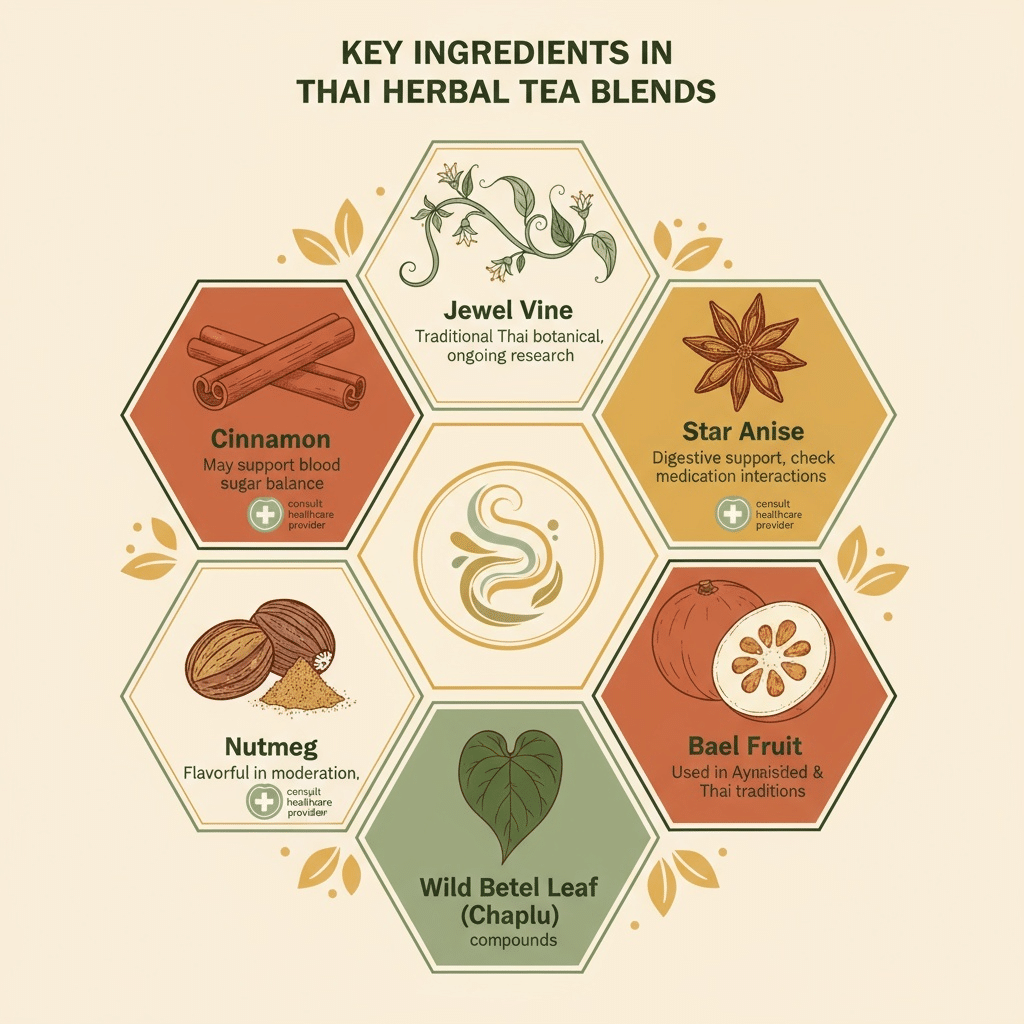
Jewel Vine (Derris scandens)
A traditional Thai botanical treasured in wellness preparations for generations. This climbing plant brings an authentic touch of Thai herbal tradition to every cup—one of those ingredients that makes herbalists light up when they talk about it, even though most Western consumers have never heard of it.
Star Anise
This star-shaped spice contains compounds that may support digestive comfort. For most people, the amounts used in herbal tea blends (typically 1-2 star anise pods per serving) fall well below levels that cause concern with medications.
Bael Fruit
Traditionally used in both Ayurvedic and Thai medicine, bael fruit has earned its place in traditional wellness practices over generations—the kind of long-term “human trial” that no modern clinical study can replicate.
Wild Betel Leaf (Chaplu)
This aromatic leaf contains antioxidant compounds according to several ethnobotanical studies. The flavor profile? Slightly peppery with hints of cilantro and mint—an acquired taste for some, but one that grows on you remarkably quickly.
Nutmeg
In traditional Thai herbal blends, nutmeg appears in carefully balanced proportions (typically 0.5-1 gram per serving) that enhance flavor without overwhelming. This is where traditional formulation wisdom really shines: these recipes evolved over centuries to find the exact amounts that provide benefit without risk.
Cinnamon
A 2023 meta-analysis suggested that 1-6 grams of cinnamon daily might reduce fasting blood glucose by 10-29 mg/dL—meaningful numbers for those monitoring blood sugar. Beyond potential health benefits, cinnamon brings a comforting sweetness that makes each sip feel like a warm embrace.
Preparation and Consumption Guidelines
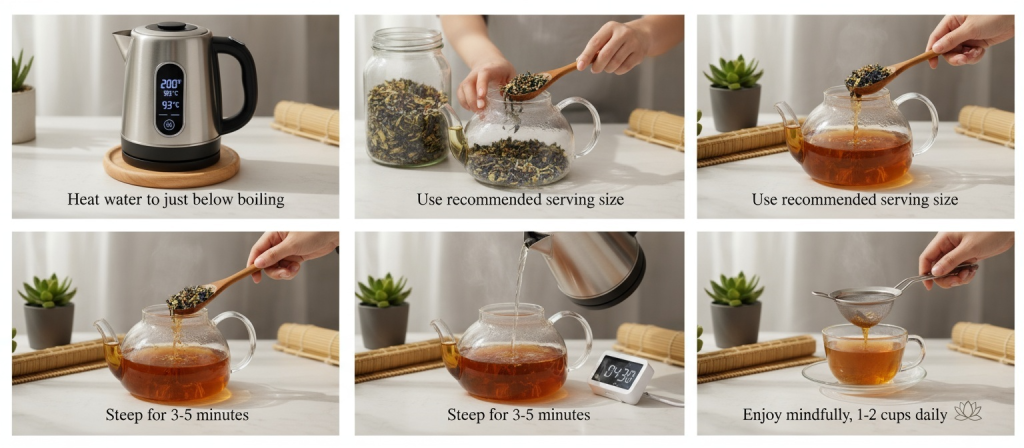
The way you prepare herbal tea can influence both its flavor profile and properties. Most Thai herbal blends shine when steeped in water that’s just below boiling (around 200°F or 93°C) for three to five minutes. This gentle approach coaxes out the flavors and properties without extracting bitter compounds.
The difference between a three-minute steep and a seven-minute steep is dramatic—like comparing a well-balanced wine to one that’s turned vinegary. Finding your perfect brewing time is part of the enjoyment.
Safe Consumption
Making herbal tea part of your wellness routine works best when approached thoughtfully. Always discuss new herbal products with your healthcare provider, especially if you have existing health conditions or take medications.
When you first try a new blend, starting with small servings (half a cup initially, increasing to full servings over 3-5 days) helps you assess your individual tolerance.
Here’s what most people get wrong: They treat all herbal teas as interchangeable, assuming that if chamomile works for them, every herbal blend will.
But products like our traditional Tapee tea contain different botanical families with different properties. Starting fresh with each new blend, even if you’re an experienced herbal tea drinker, just makes sense.
Conclusion
Thai herbal teas represent a rich tradition of botanical wellness practices that have nourished both body and spirit for generations.
By approaching these products with informed awareness, consulting healthcare professionals when appropriate, and choosing quality sources, you can make educated decisions about incorporating these traditional beverages into your wellness routines.
Remember that individual responses to herbal products vary—what works beautifully for one person may not be suitable for another, and that’s perfectly natural. When you listen to your body and honor its unique needs, these time-honored teas can become a cherished part of your daily ritual.
And if you’re wondering whether that morning cup of Thai herbal tea will play nicely with your medications? That’s exactly the kind of question worth asking. The conversation with your healthcare provider might take five minutes, but it gives you confidence to enjoy your tea fully. Natural and powerful aren’t mutually exclusive—they’re two sides of the same coin.