

- Understanding Inflammation – and Why Tea Helps
- 1. Green Tea – Everyday Defender
- 2. Turmeric Tea – Golden Joint Soother
- 3. Ginger Tea – Muscle & Tummy Tamer
- 4. Chamomile Tea – Calm Cup for Body & Mind
- 5. Peppermint Tea – Cooling Comfort
- 6. Clove Tea – Small Spice, Big Relief
- 7. Black Tea – Classic Health Shield
- Bonus: Tapee Tea – Thailand’s Heritage Blend
- Safety Snapshot (Plain English)
- One‑Week Tea‑for‑Relief Plan
- Conclusion – Sip Your Way to Comfort and Calm
Quick take: The right teas can calm everyday aches, protect against long‑term illness, and taste great doing it. Below you’ll find plain‑English reasons each tea works, simple tips for enjoying them, and links to the science for anyone who wants to dig deeper.
Understanding Inflammation – and Why Tea Helps
Inflammation is your body’s alarm system. A little is helpful (think of the red ring around a cut), but when the alarm stays on too long it can feed problems like sore joints, heart trouble, or low energy.
Plant compounds called polyphenols—found in abundance in tea—act like firefighters. They mop up cell‑damaging molecules and tell your immune system to ease off the gas, which helps reduce swelling and discomfort. Staying consistent—two or three cups a day—keeps those benefits rolling.
1. Green Tea – Everyday Defender
Why it helps: Green tea is loaded with catechins, gentle plant chemicals that lower common blood markers of inflammation. In dozens of human trials, people who drink green tea daily show smaller waistlines and less joint stiffness than non‑drinkers (study).
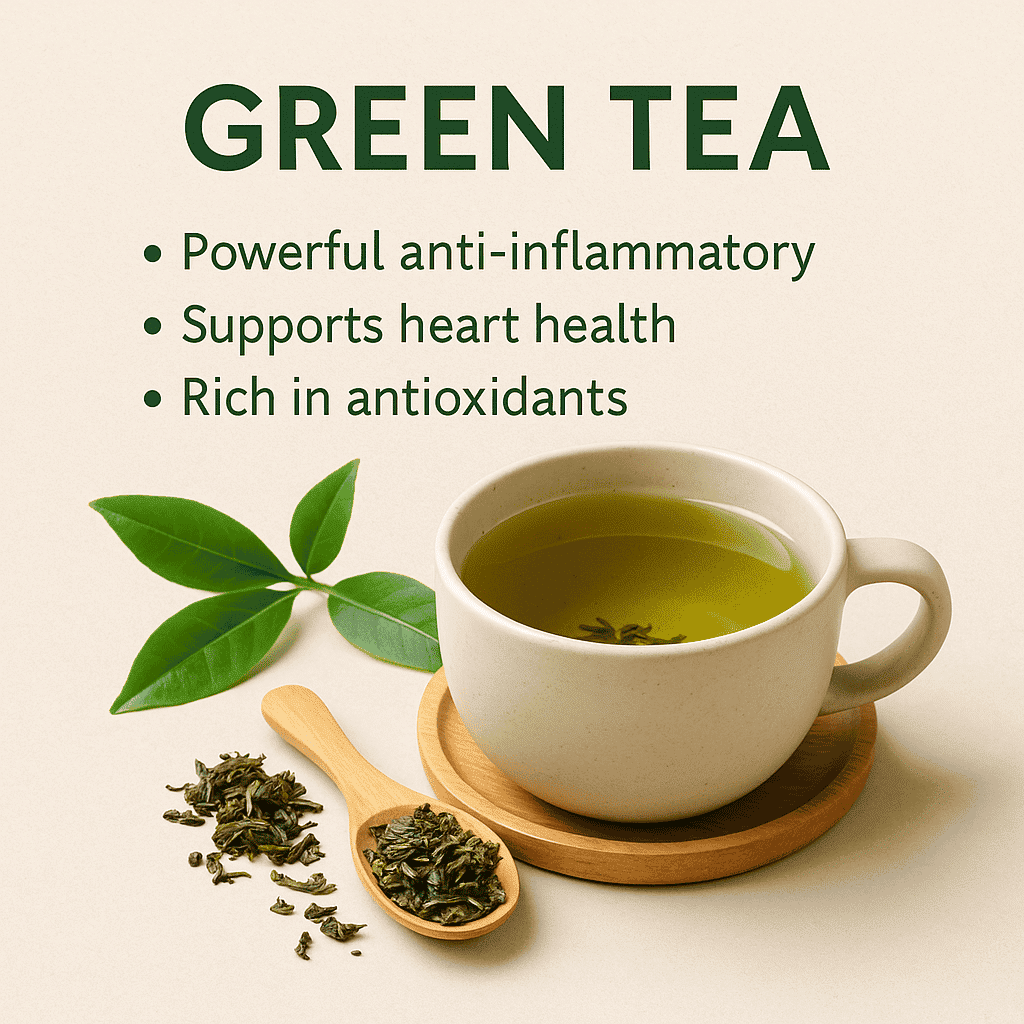
Pro tip: Squeeze in a little lemon juice. Vitamin C helps your body absorb more of green tea’s good stuff.
2. Turmeric Tea – Golden Joint Soother
Why it helps: Turmeric’s bright‑yellow compound, curcumin, has been compared to mild painkillers for easing swollen knees and fingers—without the upset stomach. One eight‑week trial found 94 % of arthritis sufferers felt at least 50 % better after daily turmeric tea (trial).

Pro tip: Add a small pinch of black pepper. It super‑charges curcumin absorption.
3. Ginger Tea – Muscle & Tummy Tamer
Why it helps: The spicy kick in ginger comes from gingerols, compounds shown to cut post‑workout muscle soreness by about a quarter and settle nausea at the same time (research).
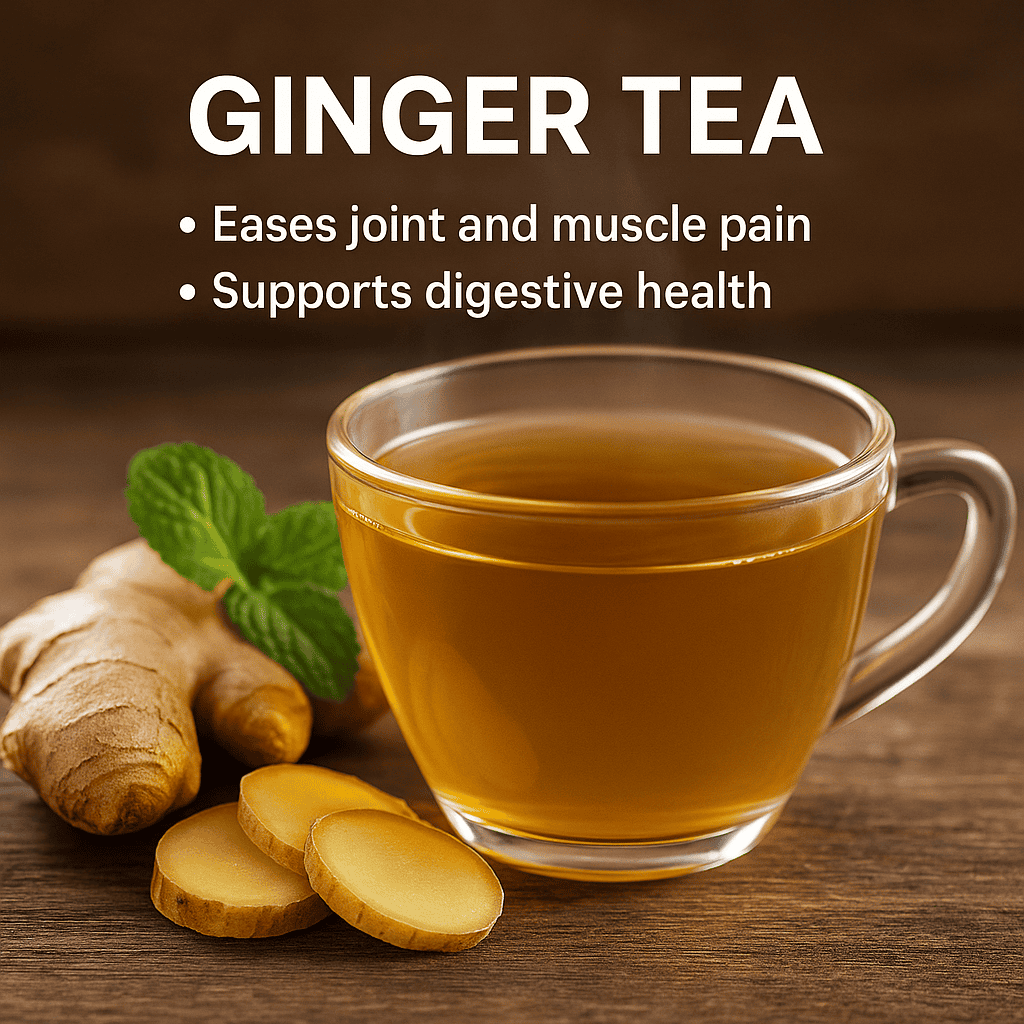
Pro tip: Stir in a spoonful of honey for extra throat‑soothing comfort.
4. Chamomile Tea – Calm Cup for Body & Mind
Why it helps: Chamomile’s gentle bloom contains apigenin, which tones down over‑eager immune cells. The result is quieter digestion, calmer skin, and easier sleep (Harvard review).

Pro tip: Enjoy 30 minutes before bed to pair its body‑soothing gifts with a deeper night’s rest.
5. Peppermint Tea – Cooling Comfort
Why it helps: Peppermint’s menthol cools inflamed digestive tissue, while rosmarinic acid in the leaves eases belly cramps. A month‑long study on people with IBS cut painful episodes by 40 % (study). Menthol vapour also opens stuffy airways.

Pro tip: Breathe in the steam for a few seconds before sipping when you’re congested.
6. Clove Tea – Small Spice, Big Relief
Why it helps: Cloves are tiny but powerful. Their main oil, eugenol, blocks the same enzyme targeted by some anti‑inflammatory drugs and helps calm gum irritation (study).
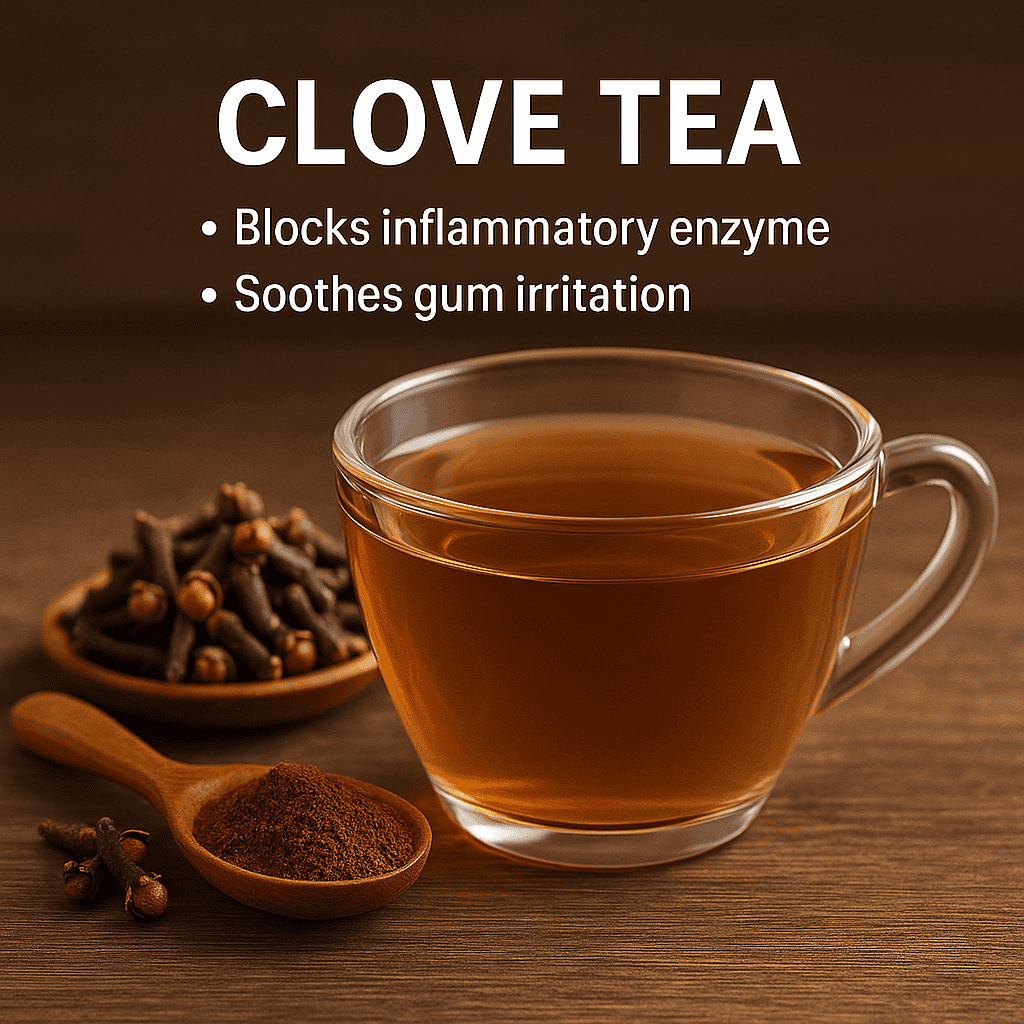
Pro tip: Swish the first mouthful around your gums before swallowing for a natural mouth‑rinse effect.
7. Black Tea – Classic Health Shield
Why it helps: When green tea leaves are fully oxidised they become black tea and gain theaflavins—polyphenols linked to healthier arteries and fewer flare‑ups of chronic inflammation. A study of nearly half a million UK adults linked two daily cups to a 9 % lower risk of early death (research).

Pro tip: Skip the sugar. Sweeteners can spark the very inflammation you’re trying to calm.
Bonus: Tapee Tea – Thailand’s Heritage Blend
Why it helps: Tapee Tea combines cassia siamea, orthosiphon, ginger, liquorice, and more—herbs Thai healers reach for when aches or stiffness strike. Independent lab tests confirm high antioxidant levels and zero steroid contamination, so you get pure relief, worry‑free.

Pro tip: It’s naturally sweet‑spicy taste means no added sugar—great news for blood sugar and waistlines.
Safety Snapshot (Plain English)
| Tea | Who should check with a doctor first | Why |
|---|---|---|
| Green | People on blood thinners like warfarin | Green tea has vitamin K |
| Turmeric | Pregnant people (large daily amounts) | Turmeric can mildly stimulate the uterus |
| Ginger | Anyone with gallstones | Ginger may boost bile flow |
| Peppermint | Frequent heartburn sufferers | It can relax the valve that keeps acid down |
| Clove | People heading into surgery | Clove oil can thin the blood |
If you’re pregnant, on medication, or managing a health condition, it’s always smart to talk with a professional before making big changes.
One‑Week Tea‑for‑Relief Plan
| Day | Morning | Mid‑day | Evening |
|---|---|---|---|
| Mon | Green Tea | Ginger Tea | Chamomile Tea |
| Tue | Turmeric Tea | Black Tea | Peppermint Tea |
| Wed | Green Tea | Tapee Tea | Chamomile Tea |
| Thu | Turmeric Tea | Ginger Tea | Clove Tea |
| Fri | Green Tea | Black Tea | Tapee Tea |
| Sat | Peppermint Tea | Ginger Tea | Chamomile Tea |
| Sun | Turmeric Tea | Tapee Tea | Clove Tea |
Feel free to swap cups around—listen to your body and your taste buds.
Conclusion – Sip Your Way to Comfort and Calm
When you make tea a daily ritual, you’re letting nature’s gentlest healers work in your favour. Explore the full range at tranquilsiam.com and start turning every cup into a soothing, science‑backed act of self‑care.
Handy Sources
- Green tea & inflammation: https://pubmed.ncbi.nlm.nih.gov/28208746/
- Turmeric arthritis trial: https://pubmed.ncbi.nlm.nih.gov/5003001/
- Ginger muscle study: https://pubmed.ncbi.nlm.nih.gov/20418184/
- Chamomile overview: https://www.health.harvard.edu/nutrition/the-health-benefits-of-3-herbal-teas
- Peppermint IBS study: https://doi.org/10.1053/gast.2022.01.017
- Clove gum study: https://pubmed.ncbi.nlm.nih.gov/25058300/
- Black tea cohort: https://doi.org/10.1186/s12916-023-02976-w